Why Your Family Office Keeps Dodging Succession Decisions
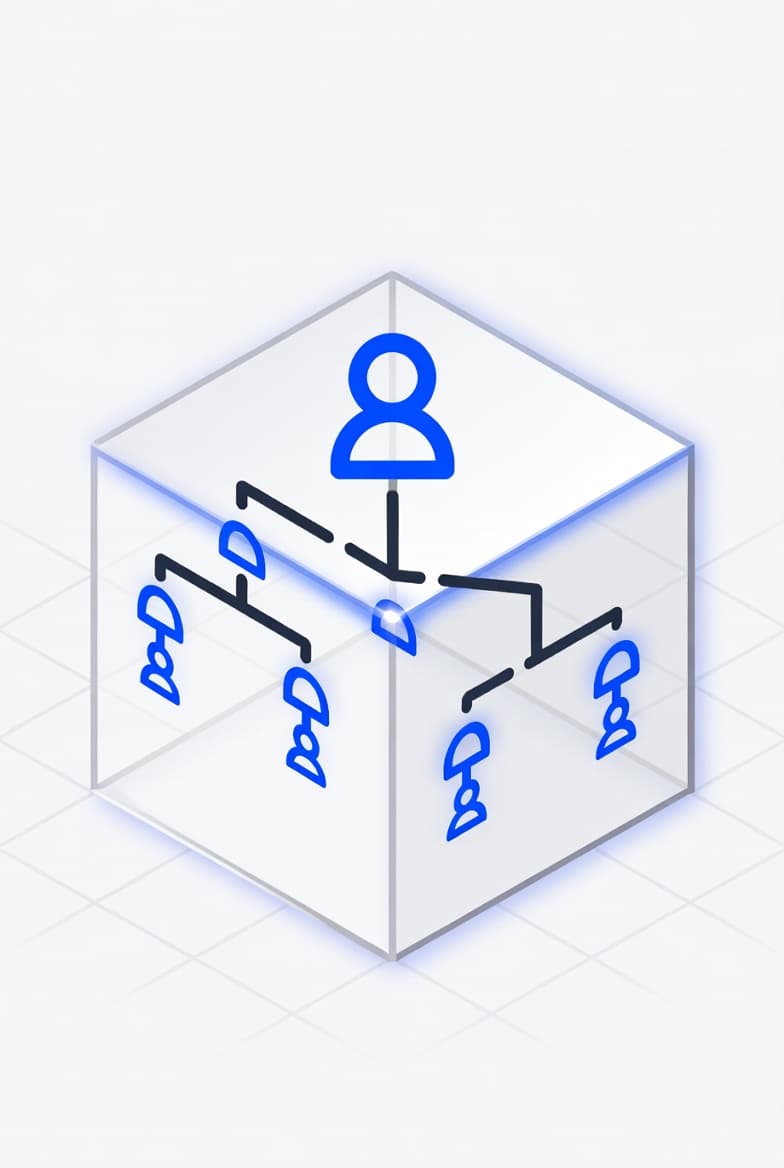
The biggest driver of weak succession readiness is not technical complexity but deliberate deferral—principals and offices simply postpone decisions, even when tools and advisors are available. Family office leaders often believe they're wrestling with unique family dynamics that require time and patience. In fact, global data reveals systematic procrastination and informality across hundreds of highly resourced offices, turning what should be strategic priorities into chronic blind spots.
For a $500M+ office, this pattern creates compounding risk. Only 53% of family offices worldwide report having a formal succession plan in 2025, up from just 47% in 2024—and among those without a plan, the most common reasons are "we've got time" (21%) and the beneficial owner not yet deciding how to divide wealth (18%). In North America, 55% of family offices have no succession plan at all, and of those that do, only 37% have a formal written plan while 34% acknowledge theirs is incomplete.
Most family offices treat succession as a legal and estate planning exercise—something to finalize "when the time comes." The offices building durable multi-generational structures treat it as an operational and governance imperative that shapes how they organize data, decision-making, and documentation today.
The Problem Is Systemic, Not Exceptional
Fragmented ownership, structures, and records is the default condition for $500M–$2B family offices across North America. The Campden Wealth/AlTi Family Office Operational Excellence Report 2024—based on 98 predominantly U.S. single-family offices with average AUM of USD 1.4 billion—finds a telling paradox: while over 80% of offices say they are satisfied with their ability to access data for timely decisions, approximately 40% remain concerned about their reliance on spreadsheets and manual aggregation of financial data. This is the operational equivalent of "it works, but we know it's fragile."
Governance documentation sits on equally shaky foundations. Only "a little over half" (57%) of family offices have any succession plan, and among those without a plan, 65% are dissatisfied with their succession readiness—making it one of the lowest-satisfaction areas in the entire study. Meanwhile, 62% have a mission statement, but around 40% lack a documented strategic investment framework, and family constitutions and codified family histories are rare.
The urgency is compounded by timing. Bank of America's Family Office Study finds that 87% of family offices have not yet transitioned leadership to the next generation, yet 59% expect that transition within the next 10 years. Among offices with less-engaged principals, 73% expect the next generation to redefine the office's mission or purpose. Translation: a large cohort of offices will hand over the keys to successors within a decade—often without a fully documented entity and ownership map that successors can rely on.
The Real Impact: Three Compounding Costs
Financial: Across 3,250 wealthy families studied over 25 years, 70% lost their wealth by the second generation and 90% by the third—and 96% of these failures were attributed to internal issues like governance gaps, poor communication, and unprepared heirs, not investment performance. Alternative investment operations cost 5–10x more than traditional public markets, primarily due to manual processing and reconciliation of fragmented data.
Operational: Fragmentation forces CIOs, CFOs, and COOs into "chief reconciliation officer" roles. Case work shows family office staff spending roughly 75% of their time manually pulling, reconciling, and reformatting data across systems. Families often receive consolidated performance reports "weeks late," making portfolio management reactive and slowing capital allocation. Doubling entities can triple or quadruple aggregation time.
Governance: Fragmented ownership records undermine confidence in decision-making and succession readiness. If new leaders inherit an office whose records are scattered and whose governance documents are thin, they are more likely to question its value and consider alternative structures.
Why Sophisticated Offices Still Get This Wrong
Fragmented ownership is not simply a technology deficit. It is the converging outcome of founder psychology, legacy systems, and behavioral aversion to change.
Founder-centric knowledge sits at the core. Many family offices are extensions of a founder's worldview rather than designed institutions. Founders retain de facto control over key relationships and decisions about who owns what in ways that are only partially documented. This leads to "black box" decision-making and piecemeal documentation—especially in first- and second-generation offices, which represent 45% of Campden's sample.
Lack of intentional data architecture leaves information scattered. Offices layer systems opportunistically—adding a new PE portal or custodian login—rather than design a unified data model. Only 26% of offices see their technology as leading edge, and only 25% use wealth aggregation platforms.
Behavioral and cost aversion works against proactive transformation. Projects to map entities, clean data, and implement platforms are seen as disruptive and expensive, with long-term benefits that are "invisible" until a crisis. More than half of offices have no succession plan despite recognizing the risk—demonstrating a systematic pattern of deferring structurally important but non-urgent work.
What Daniel Ortiz's Office Discovered
Daniel Ortiz, 54, serves as Chief Financial Officer of a $900 million single-family office in Dallas. The office supports a second-generation energy and real estate family, with the founder still chairing the family holding company. With a lean team of nine, the office relies on multiple banks and custodians and tracks most entity-level activity in spreadsheets.
During a routine year-end planning cycle, the founder announced he wanted to shift a meaningful block of operating company shares into a new trust for two grandchildren "before next summer." Daniel realized the office had no clear view of how existing trusts, LLCs, and personal holdings were layered and who would control voting rights post-transfer. What should have been a straightforward modeling exercise turned into a six-week scramble. The transfer was postponed twice because no one felt confident signing off.
At a quarterly family governance meeting, one of the adult children asked: "If Dad had a stroke tomorrow, who actually has authority to approve distributions and equity moves across all these entities?" Daniel could not answer without caveats, and the outside counsel's answer differed from his. The family realized their real problem wasn't missing documents—it was that decisions and data lived in people's heads and disconnected files.
Over the next 90 days, Daniel led a joint project with the controller and general counsel to map every entity and trust into a single, structured chart linked to a basic aggregation platform. They defined decision rights for key actions, documented them in a short governance memorandum, and embedded approval workflows. By the end of the quarter, they could produce a consolidated view of ownership and decision-makers in minutes, and the previously delayed share transfer was executed with clear sign-offs and an audit trail.
Three Actionable Solutions
Solution 1: Build a Living Entity & Ownership Map
A structured, continuously maintained entity and ownership map captures all legal entities (companies, trusts, partnerships, foundations, SPVs), their relationships, and who owns what—implemented in a system, not just a static slide or spreadsheet.
Fragmentation thrives when no one can see the full structure. By building a canonical, system-based entity map linked to real data, the family office replaces institutional memory with a shared, auditable view. Platform providers highlight that consolidating entities into a single ledger dramatically reduces reconciliation errors and improves audit readiness. Case experiences show that staff time spent manually reconciling structures can fall from 60–75% to a fraction of that.
Implementation: Start with a 90-day "mapping sprint." In weeks 1–3, appoint an internal project owner and compile a master list of all entities and trusts from legal files, tax filings, and banking relationships. In weeks 3–6, normalize this into a standardized schema and decide on a platform to hold it. In weeks 6–10, link each entity to its accounts, custodians, and key documents, and validate with external advisors. In weeks 10–12, embed a maintenance workflow: every new entity or restructuring flows through a "change ticket" process that updates the map.
Resources: 0.3–0.5 FTE for the sprint; legal/tax advisor hours; modest platform budget.
The Tradeoff: The mapping exercise surfaces inconsistencies and missing documents that may be politically sensitive. However, doing this proactively is far less costly than attempting to untangle the structure mid-crisis.
Solution 2: Replace Spreadsheet-Driven Reporting with a Consolidated Data Platform
A consolidated data platform automates aggregation from banks, custodians, PE/VC managers, and internal systems into a single source of truth for positions, cash, and performance—displacing the spreadsheet as the primary operational hub.
At the heart of fragmentation is the spreadsheet: flexible but brittle, dependent on key individuals and devoid of audit trails. Campden data show that 40% of offices remain concerned about their reliance on spreadsheets. WealthArc documents that alternative operations cost 5–10x more than traditional due to manual processing. Asora's research shows that doubling holdings can triple or quadruple aggregation time—while modern platforms flatten that relationship.
Implementation: Begin by scoping your current data sources and quantifying time spent on manual downloads and reconciliations. Identify the top 3–5 pain points. Select a platform that can integrate with most providers and support your entity map. Implementation involves (1) setting up data feeds, (2) defining reconciliation rules, and (3) designing consolidated dashboards. Parallel-run old and new processes for at least one quarter before retiring legacy spreadsheets.
Resources: 0.5 FTE for several months; vendor implementation team; budget for licenses and integration.
The Tradeoff: Platform projects consume leadership attention and create vendor lock-in risk. However, continuing to scale via spreadsheets manifests as hidden staff costs, higher error risk, and a brittle environment the next generation cannot trust.
Solution 3: Formalize Governance & Decision Rights Around Ownership and Succession
A governance framework clearly defines who has authority over what decisions (investments, distributions, entity changes, trustee appointments, leadership roles), supported by documented policies and appropriate forums.
Even the best systems cannot compensate for fuzzy decision rights. Fragmented ownership records often reflect underlying confusion over who is supposed to own or control which assets. RSM reports that 55% of offices have no succession plan and that lack of clarity "can create internal disputes, power struggles and even jeopardize the continuity of the family office."
Implementation: Create a decision-rights matrix listing major decision types and identifying who currently decides. Draft or refresh a mission statement and investment policy. Working with governance counsel, design governance forums—an owners' council for economic decisions, a family council for values, a board for overseeing the office. Link these decisions to documentation and systems: ensure approvals are captured and stored against relevant entities.
Resources: Principal and family members' time for workshops; external governance advisor; legal review.
The Tradeoff: Governance work can surface latent conflicts and feel bureaucratic. However, without this work, investments in platforms risk becoming elegant shells around unresolved power dynamics.
The First 90 Days Matter More Than You Think
The offices that build durable multi-generational structures aren't the ones with the most advanced technology—they're the ones with the clearest thinking about what decisions matter, what information those decisions require, and who has authority to make them. The evidence shows that deferral, not complexity, is the dominant strategy. That pattern is a choice, and it's reversible.
Starting this work doesn't require a technology overhaul. It begins with a governance conversation: How do we want to make decisions about ownership, control, and succession? What information does that require? Document those answers. Then audit your current state against that design.
For your office, start here: Map your approval workflows for ownership changes, distributions above a threshold, and trustee modifications. Identify where verification breaks down—where you're hunting through emails or checking outdated spreadsheets. Then ask: If we handed this structure to a successor tomorrow, could they operate confidently within 30 days? If the answer is no, you've identified the work.
The best time to organize your ownership structures and decision rights was five years ago. The second-best time is the next quarter—before the transition becomes urgent and while you still control the timeline.
Ready to get started?
The first step is an objective assessment. No pitch deck, no commitment. Just a clear analysis of where your current strategy aligns with best-in-class standards.
Assess My StrategyWe respect your privacy. This is a professional consultation, not a sales pitch.